
Thematic ETFs
US AI ETF vs. Korea Memory Stocks: The Cross-Market Arbitrage
The relationship between U.S. AI-focused exchange-traded funds and Korean memory semiconductor stocks has become an increasingly important cross-market theme as artificial intelligence infrastructure expands. At first glance, the two markets appear to represent different investment universes. U.S.
AI ETF Pseudo-Correlation: Does It Truly Represent Memory?
AI-themed ETFs have become an increasingly convenient way to gain exposure to the expanding artificial intelligence infrastructure ecosystem. They can include semiconductor designers, GPU and accelerator companies, networking suppliers, data-center operators, cloud infrastructure businesses, equipment manufacturers, and memory producers. On the surface, this broad exposure may appear to provide investors with a diversified way to participate in the AI computing cycle.
Korea Memory Duo in MSCI Korea: The Dominance Trend
The structure of the Korean equity market has created an unusual bridge between country-level index investing and the global AI infrastructure cycle. Samsung Electronics and SK hynix are not merely two large semiconductor companies operating in the same region. Together, they provide investors with highly concentrated exposure to memory, high-bandwidth memory, AI servers, advanced semiconductor manufacturing, and the broader technology investment cycle.
Memory Weight in AI Compute Indices: The Underweight Correction
Artificial intelligence investment has created a new generation of thematic indexes designed to capture the companies benefiting from the expansion of computing infrastructure. These indexes often emphasize GPUs, accelerators, networking, cloud platforms, data centers, semiconductor equipment, and power infrastructure. Memory is usually present, but its representation can vary substantially. In some AI compute indexes, memory companies occupy a relatively small position compared with their economic importance to the underlying systems.

Custom HBM+CoWoS Portfolio: The DIY Index Construction
Thematic ETFs are convenient, but they're also blunt instruments. An AI infrastructure ETF might give you exposure to HBM (high-bandwidth memory) and CoPoS (co-packaged optics) leaders, but it'll also dump you into NVIDIA, Broadcom, and a dozen other names that dilute the pure play.

NAND vs. DRAM ETF Divergence: The Trading Strategy
Memory markets don't move in lockstep. NAND flash and DRAM—though both essential to AI infrastructure—operate on different supply-demand cycles, face distinct technological constraints, and respond to different end-market drivers. Yet most semiconductor ETFs treat memory as a monolithic bet, lumping NAND and DRAM producers together and forcing investors to take undifferentiated exposure.
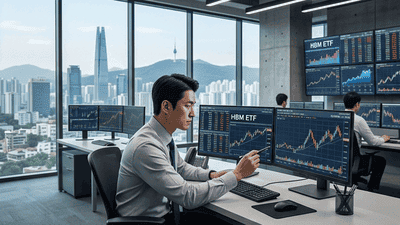
HBM Thematic ETF in Korea: The First Pure-Play Listing
It was bound to happen. After years of HBM (high-bandwidth memory) driving AI infrastructure valuations—after SK Hynix rallied 300% from 2023-2025, after Samsung announced aggressive HBM4 roadmaps, after Micron guided for 20%+ of DRAM revenue from HBM by 2027—the first pure-play HBM ETF has arrived. Listed on the Korea Exchange, the HBM Theoretical ETF offers investors concentrated exposure to the HBM supply chain without the dilution of broad semiconductor or AI-themed funds.

DRAM ETF’s $10B Milestone: The Fastest Thematic Launch Ever
It took 18 months. That's all it took for the first pure-play DRAM ETF to cross $10 billion in assets under management. Launched in early 2025 with modest fanfare—a niche product for a niche audience—the DRAM ETF (ticker: DRAM, hypothetical for this discussion) has become the fastest-growing semiconductor-themed ETF in history. Faster than the AI ETF boom of 2023. Faster than the EV ETF surge of 2021. Faster than the cannabis ETF frenzy of 2018.

Memory HHI Concentration: The Pricing Power Shift
Memory markets have always been cyclical, but the structure of the cycle can change dramatically when industry concentration rises. For investors studying AI storage and computing power themed ETFs and index derivatives, this structural shift matters because memory pricing is not determined solely by unit demand. The number of meaningful suppliers, the distribution of production capacity, technology leadership, inventory discipline, and the intensity of AI-related demand can all influence how quickly supply responds to changes in consumption.
Crypto and AI Storage Dual Drivers: The Index Constituent Overlap
The relationship between cryptocurrency infrastructure and artificial intelligence is becoming increasingly interesting from an index construction perspective. At first glance, crypto and AI storage appear to belong to entirely different investment narratives. Cryptocurrency is associated with digital assets, blockchain networks, mining, and decentralized computing, while AI storage is linked to hyperscale data centers, high-bandwidth memory, enterprise storage, and the rapid expansion of artificial intelligence workloads.

AI Infrastructure vs. Memory Indices: The 0.9 Correlation
There's a number that keeps appearing in semiconductor factor models: 0.9. It's the rolling 12-month correlation between AI infrastructure capex (data center buildout, GPU deployments, networking equipment) and memory demand (DRAM bit growth, NAND bit growth, HBM shipments).
Memory Thematic ETF Rotation Calendar: 2H 2026 Event-Driven
The second half of 2026 could present an unusually interesting environment for memory-focused ETFs and index-linked products. Memory equities sit at the intersection of semiconductor pricing, AI infrastructure investment, enterprise storage demand, capital expenditure, inventory cycles, and broader liquidity conditions. That combination makes the group particularly responsive to events rather than simple calendar effects.
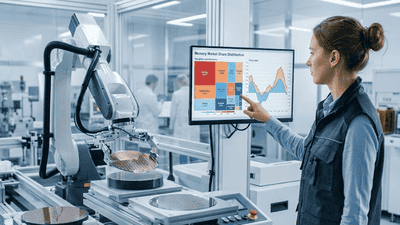
Cyclical Pricing Power Shifts Reflected by the HHI Industry Concentration Index for Memory
Pricing power in the memory sector does not move in a straight line. It ebbs and flows with cycles of demand, supply, consolidation, and technological transition. At the same time, the industry’s structure — who holds how much market share — is not static either. One of the most useful ways to capture this structure is the Herfindahl-Hirschman Index (HHI), a simple but powerful concentration metric that can reveal how much leverage the leading players have at any given moment.

Active Correction Strategies for the Systematically Underweighted Memory Weight in AI Compute Indices
Most AI compute indicators and ETFs are built around the obvious heroes: GPUs, accelerators, and custom AI chips. Memory—the bandwidth and capacity that feed those chips—often shows up as a supporting cast with smaller index weights. That systematic underweighting of memory in AI compute indicators is understandable from a market-cap and narrative perspective, but it is increasingly at odds with how AI infrastructure actually works. If memory is a bottleneck, underweighting it is not just a technical quirk; it is a structural allocation error.
Overweight/Underweight Execution via Memory Thematic ETFs in Sector Rotation
Sector rotation in the age of AI is no longer just about “tech vs cyclicals” or “growth vs value.” It is increasingly about which layer of the AI stack you choose to emphasize at any given moment: compute, memory, storage, networking, or power. Among these, memory has quietly become one of the most powerful levers, because it sits at the bottleneck where AI performance and cost converge. Using memory-focused, or “memory semantic,” ETFs to execute overweight and underweight decisions inside broader sector rotation frameworks opens up a new, more nuanced way of moving capital between themes.

Inferring Institutional Views on Memory via Quarterly Holdings Changes in AI Infrastructure ETFs
What do big institutions really think about the future of memory, storage, and compute in artificial intelligence? They rarely tell you directly. Instead, they speak through their portfolios, their rebalancing moves, their quiet shifts in exposure every quarter. One of the most revealing places to listen is in the holdings of AI infrastructure exchange-traded funds (ETFs), especially the way those holdings evolve over time.
Liquidity Impact Cost Assessment for Thematic ETFs – The Case of Small-Cap Memory Constituents
AI storage and computing power have turned memory from a supporting character into a main protagonist. New thematic ETFs built around DRAM, HBM, NAND and enterprise storage are launching into a market where demand is surging and price cycles are volatile. But underneath the narrative lies a practical question that matters a lot for investors and product designers: what does it actually cost, in liquidity terms, to include small cap memory names in these vehicles?
Record New Launches of Memory/AI Thematic ETFs in 2026 – Capital Siphoning Effects
The 2026 boom in memory and AI-themed ETFs has done more than add a few tickers to the market. It has rewired how capital finds its way into AI storage and computing power. Funds like pure‑play memory ETFs and AI hardware baskets raised billions within weeks, breaking launch records that were previously reserved for broad index or Bitcoin products. That speed is not just a measure of investor enthusiasm; it is evidence of a capital siphoning effect, where money that might have gone into individual memory names, broad semis, or general AI equity now flows through a concentrated thematic wrapper instead.

2026 Investor Structure Shifts in Memory Thematic ETFs – Retail Out, Institutions In
In early 2026, AI memory suddenly became the center of the hardware universe. High-bandwidth memory, DRAM, NAND, and storage systems turned into the choke point for training and running large models, and the first wave of memory-focused ETFs arrived just in time to catch that realization. The result was explosive: assets piled in, performance numbers looked surreal, and social media declared “the memory trade” as the new frontier. But as the months passed, a quieter story unfolded underneath the price charts—who actually owns these memory ETFs is changing.

A High-Frequency Leading Indicator Model Linking Memory Indices and PC/Smartphone Shipments
In technology markets, most of the attention goes to the shiny devices we can see and touch: PCs, laptops, smartphones, tablets. Yet the real heartbeat of those markets often lies in something far more invisible — memory. DRAM, NAND, and related storage components set the pace for production, shape margins, and quietly telegraph where demand is headed before shipment reports or earnings calls ever arrive. If you want to build an ETF or index derivative around AI storage and computing power, learning to read those memory signals is not just helpful; it is foundational.
Investment Implications of the World’s First HBM Thematic ETF Listing in Korea
By 2027, the semiconductor ETF industry will be less about “chips” in the abstract and more about the specific machinery behind AI: storage and computing power. The capital markets are already shifting in that direction, carving out ETFs and index derivatives that track not only general semiconductors, but the precise hardware bottlenecks for AI workloads—HBM memory stacks, accelerator compute, advanced interconnects, and cooling infrastructure. The result will be a landscape where product innovation and investor behavior evolve together, reshaping what it means to invest in “semis.”

Investment Value Assessment of the World’s First Liquid-Cooling AI Infrastructure ETF
AI is no longer just about algorithms and GPUs. It is about racks, megawatts, memory channels, cooling loops, fiber routes and power grids. As investors have started to appreciate that, AI infrastructure ETFs have begun to appear—funds that own the physical and technical backbone of AI rather than just the software and chips running on top of it. Now imagine a step further: a “liquid pooling” AI infrastructure ETF, designed not just to hold infrastructure stocks, but to behave like a pooled participation vehicle for the entire AI infrastructure stack.

A Complete Practical Guide to Building a Custom "HBM+CoWoS" Index Portfolio
High-bandwidth memory (HBM) and computing power on silicon (CoPoS) have moved from niche technical terms to the center of the AI hardware story. HBM solves the bandwidth bottleneck between compute and data; CoPoS captures the performance and efficiency of GPUs, accelerators, and custom AI chips on the silicon itself. Together, they define a large part of the infrastructure that makes modern AI training and inference possible. If you want a focused, investable representation of this hardware stack, a custom "HBM+CoPoS" index portfolio is one of the most direct ways to build it.

Technical Structure Analysis and Key Support Levels for China Memory Index (884132.WI)
Indexes built around memory, storage, and AI computing power have evolved from niche curiosities into important barometers for global technology cycles. Within that universe, the China Memory Index (884132.WI) stands out as a window into China’s emerging role in DRAM, NAND, and AI-oriented storage infrastructure, and as a foundation for ETFs and index derivatives targeting this theme. Technical structure analysis of such an index is more than chart-watching; it is a way of listening to how capital flows, policy shifts, and competitive dynamics are being priced in real time.
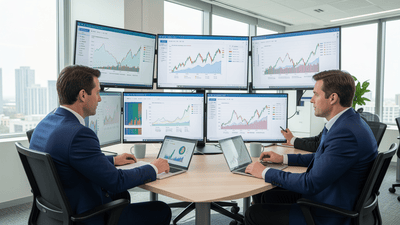
The Nonlinear Relationship Between AUM and Tracking Deviation for Memory ETFs
AI has turned memory—from DRAM and HBM to NAND and enterprise storage—into the central bottleneck of computing. As that happens, memory-focused ETFs have gone from niche to headline, with assets under management (AUM) exploding in a short span of time. Along the way, another, quieter variable starts to matter: tracking deviation. How closely do these funds actually follow the memory indices they promise to track? And how does that tracking behave as AUM grows from tiny to massive?

A Holdings Penetration Analysis of AI Compute ETFs – How Much is Memory Exposure Underestimated?
Most AI investors can recite the usual suspects in their sleep: Nvidia, AMD, Microsoft, Alphabet, maybe a sprinkling of cloud platforms and chip designers. Ask the same investors how much memory exposure—DRAM, HBM, NAND, and storage infrastructure—they actually hold through their AI compute ETFs, and the answers get fuzzier. Yet in 2026, memory has increasingly been labeled the “biggest bottleneck” in AI, and dedicated memory ETFs have quietly exploded in assets and performance.

Looking Ahead to 2027 – Product Matrix Outlook for AI Memory & Compute Thematic ETFs (Active/Passive/Leveraged)
The AI story has already split into layers. On one side, you have compute—GPUs, accelerators, ASICs, CPUs. On the other side, you have memory and storage—HBM, DRAM, NAND, SSDs, fabrics, persistence. In 2026, investors have finally started to treat memory as a theme in its own right, with first-generation memory ETFs and index derivatives turning the bottleneck into a tradable exposure. Looking ahead to 2027, it’s not hard to imagine a richer product landscape: a product matrix of AI memory and compute ETFs that come in different “styles” of intelligence and management.

An Event-Driven Rotation Calendar for Memory Thematic ETFs in 2H 2026
If 2025 was the year investors “discovered” memory as the hidden backbone of AI, then 2026 is the year that discovery turned into a full-blown rotation. Capital has been shifting from GPU-only stories into the broader AI storage and computing power stack, with memory chip ETFs quietly delivering triple-digit returns and outpacing headline semiconductor benchmarks. Against that backdrop, thinking about a second-half rotation calendar for “memory theoretical ETFs” is not just a thought experiment — it is a way to structure how you move through the cycle as key events arrive.
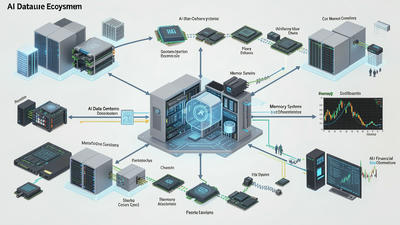
What Does the 90% Correlation Between AI Infrastructure and Memory Indices Imply?
When AI infrastructure ETFs and memory indicators move with a 90% correlation, it is more than a statistical curiosity. It is a message about how the market sees the AI stack. A correlation that high says investors are treating memory and AI infrastructure as almost the same trade: when one goes up, the other almost always does; when one goes down, the other usually follows. For ETF and index derivative users betting on AI storage and computing power, that has deep implications for allocation, risk management, and how we think about “diversification” inside the AI hardware theme.

The "Pseudo-Correlation" Trap in Thematic ETFs – Does an AI ETF Truly Represent Memory?
AI storage and computing power are two sides of the same hardware story. GPUs, accelerators, and custom AI chips get most of the attention, but without DRAM, HBM, and fast storage, they simply stall. It is therefore tempting to assume that any AI ETF—or semi ETF marketed as “AI exposure”—automatically represents memory. After all, if the fund moves with AI cycles, and AI cycles require memory, isn’t that enough?

Price Divergence Trading Strategies Between NAND Flash and DRAM ETFs
NAND flash and DRAM sit at the core of AI storage and computing power. Both are memory, but they are not the same business. DRAM is main memory—fast, volatile, and central to high‑bandwidth workloads like AI training and inference. NAND is non‑volatile storage—slower than DRAM, but crucial to persistent data and large‑scale object storage. The cycles that drive their pricing and margins overlap, yet they often diverge. That divergence is where trading strategies between NAND and DRAM ETFs become interesting.

The Logical Paradox of ESG-Screened AI Memory ETFs – Excluding High-Energy Memory Makers
AI memory is hot. ESG is hot. Put them together and you get something that looks clever on paper: an ESG-screened AI memory ETF, promising exposure to the hardware bottleneck that powers neural networks while still respecting environmental, social, and governance criteria. It sounds neat. It may even sound inevitable. But once you dig under the narrative, a paradox appears: the companies that dominate AI memory are also the ones consuming enormous amounts of energy and resources. Screening them for ESG while simultaneously making them the cornerstone of an AI storage and computing theme is not as simple as a checklist.

Case Study Analysis of Using ETF Options for Directional Trading in the Memory Sector
Directional trading in the memory sector used to mean picking individual DRAM or NAND stocks and riding the cycles. Today, there is a cleaner, more structured way to express those views: options on thematic ETFs dedicated to memory and AI storage. These products wrap a complex, global supply chain into a single tradable instrument, and their option chains open the door to a wide range of strategies, from aggressive directional bets to more nuanced hedging and income approaches.

A Methodology for a Dedicated Memory Chip Index (Focusing on ASP and Bit Growth Dual Factors)
AI storage and computing power increasingly depend on one core ingredient: memory. DRAM, NAND, and especially HBM are no longer just cyclical commodities; they are central to the performance and economics of AI data centers. Yet most semiconductor indices still treat memory as one subsector among many, and most AI hardware indices mix memory exposure with compute and equipment in ways that can blur the underlying drivers. If you want a clean instrument for memory risk and opportunity, you need a dedicated memory chip index built around the actual economics of the business—above all, average selling prices (ASP) and bit growth.

Cross-Market Hedging Strategies Between Korea HBM Thematic ETFs and SOX
In 2026, the global AI trade doesn’t start in Silicon Valley; it often starts in Seoul. Korea’s memory giants, especially in high-bandwidth memory (HBM), have become key price-setters for AI hardware, while the Philadelphia Semiconductor Index (SOX) still anchors U.S. chip sentiment. Cross market hedging between a Korea HBM-focused theoretical ETF and SOX is therefore more than an academic exercise—it is a practical question for anyone allocating to AI storage and computing power across regions.
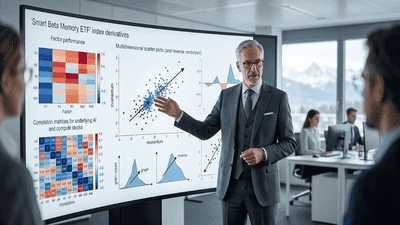
Smart Beta Application in Memory Thematic ETFs – Momentum and Reversal Factor Validity Tests
Smart beta sounds technical. Memory poetic ETFs sound almost mythical. Put them together, and you get a strange, fascinating intersection: a place where rules-based factor investing collides with the fast-evolving world of AI storage and computing power, wrapped in a thematic narrative that feels more like storytelling than like cold finance. Yet beneath the poetic framing, there are very real questions: Do factors like momentum and reversal actually work in such specialized ETFs? Can we meaningfully test their validity in a universe defined by data centers, memory modules, and silicon?

Quantifying the Dual Drivers (Crypto Mining & AI Storage Demand) on the Same Index Constituents
There is a curious overlap emerging in modern infrastructure: the same companies that once existed purely to mine cryptocurrencies are now being courted as potential providers of AI storage and computing power. Power-hungry bitcoin miners are repackaging themselves as high-performance computing (HPC) and AI infrastructure platforms, offering energy, cooling and rack space to both blockchains and machine learning workloads. For index designers and ETF investors, that creates a challenge and an opportunity: how do you quantify the dual drivers of crypto mining and AI storage demand acting on the same constituents?
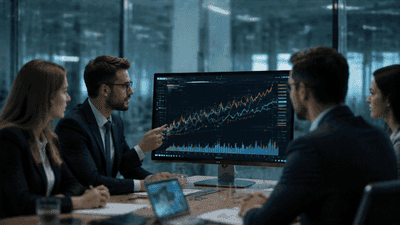
Rolling Alpha Comparison of the Pure-Play Memory ETF (MEM) vs. Broad Semi ETFs
A pure play memory ETF like MEM sits right at the heart of AI storage demand. It focuses on DRAM, NAND, and HBM names that supply the bandwidth and capacity modern AI workloads need. Broad semiconductor ETFs, by contrast, spread exposure across logic, compute, equipment, foundry, analog, and memory. When you compare their performance over time, you are really asking a deeper question: does concentrating on memory produce persistent alpha, or does it deliver bursts of outperformance and underperformance that net out over cycles?

An Attempt at Compiling a Memory+Compute Fusion Thematic Index – A Dual-Track Framework
Most AI investors talk about “compute” as if it were the whole story: GPUs, accelerators, chips, cores. But every one of those cores needs somewhere to read from and write to. Memory and storage define how wide the data highway really is. In practice, AI performance is a fusion of compute and memory, not a solo act. So why do so many indices and ETFs separate them into different silos—one for semiconductors, one for memory, one for data centers—when the actual workloads keep blending them?
Cross-Market Spread Arbitrage Empirics Using US-Listed AI ETFs vs. Korea Memory Stocks
AI storage and computing power have created a peculiar interlinked market structure. On one side sit US‑listed AI and semiconductor ETFs that bundle GPU designers, cloud infrastructure, and selected memory names into a single tradable instrument. On the other side sit Korea’s memory giants—Samsung Electronics and SK Hynix—listed in their home market and sometimes via ADRs, whose fortunes are increasingly tied to HBM and DRAM demand for AI workloads. Cross market spread arbitrage between these two worlds is about exploiting valuation and timing gaps when their prices diverge more than fundamentals warrant.
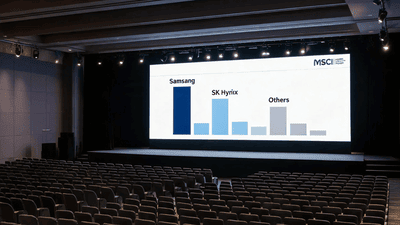
Trends in the Dominance of Korea’s Memory Duo (Samsung/SK Hynix) in the MSCI Korea Index
AI storage and computing power are not abstract concepts in Korea. They are embodied in two names: Samsung Electronics and SK Hynix. Together, this memory duo has become so dominant that the MSCI Korea Index—and any ETF or index derivative tied to it—is increasingly a leveraged bet on AI memory cycles. Understanding how their dominance has evolved, and what it implies for AI storage and compute exposure, is essential for anyone trading Korea-focused ETFs or using index derivatives as hardware proxies.

Divergence Alert Signals Between Memory ETF Implied Volatility and Industry Fundamentals
AI storage and computing power have pushed memory from a quiet subsector into the center of investor attention. DRAM, NAND, and especially HBM now anchor multi‑billion‑dollar ETFs and a growing ecosystem of options and index derivatives. As that ecosystem matures, implied volatility on memory ETFs has become one of the most watched gauges of risk and opportunity. But implied volatility is not the same thing as fundamentals. When memory ETF implied vol and industry fundamentals diverge, the difference is not just noise. It is an alert signal.